The walk
water and
fountains
Length - 3.5km |
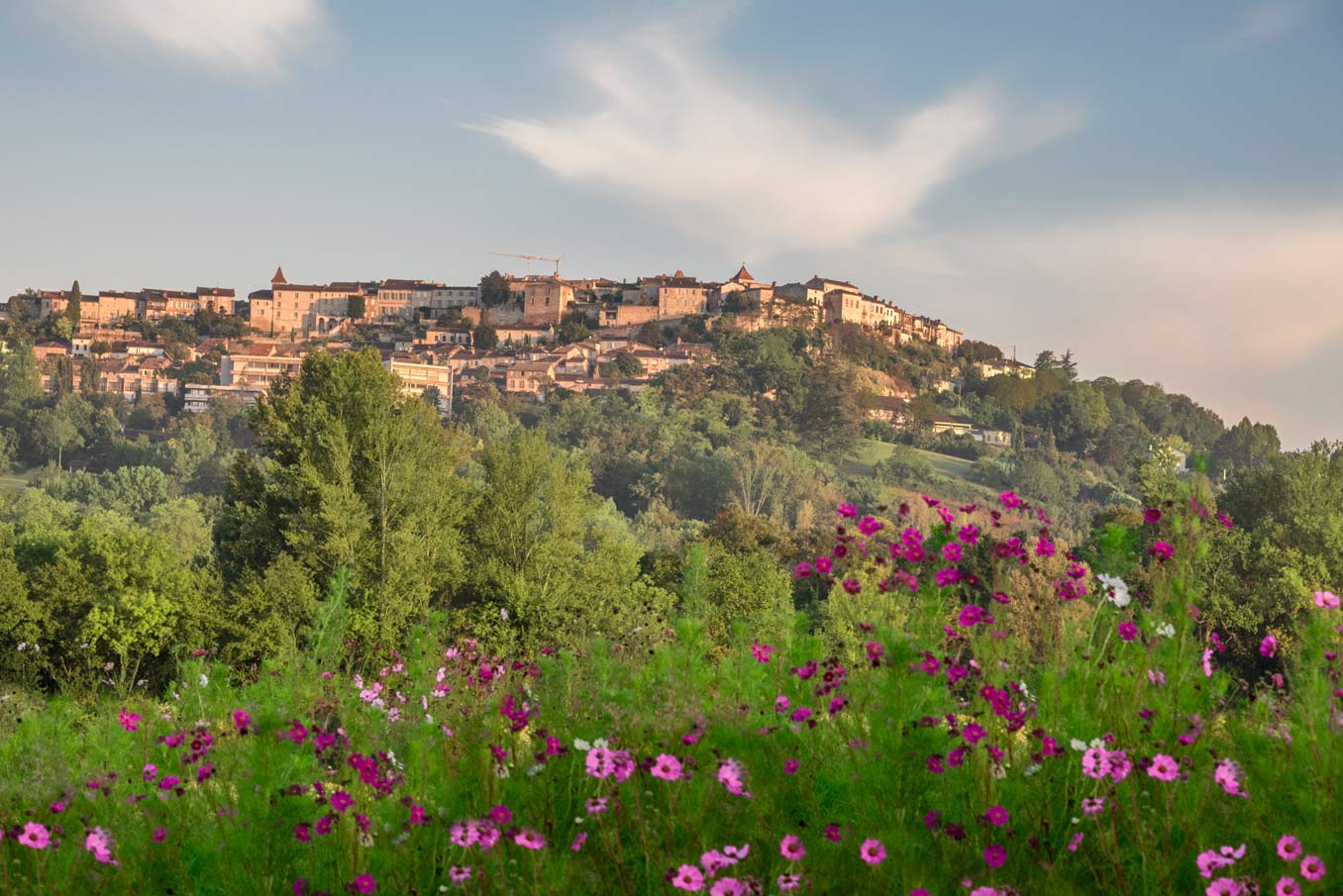
"One of the Most Beautiful Villages in France", "Stop on the way to Santiago de Compostela". Proudly perched on its promontory, as a sentinel at the confluence of Lendau and Barguelonne, the medieval city deploys its charms from the Place des Cornières to the viewpoint of the Barbican overlooking the Jardin du Pélerin and the steep streets of the village.
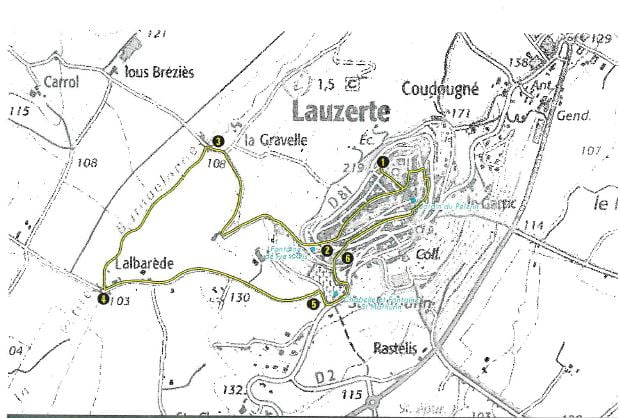
1 - From the Promenade de l'Eveillé, cross the Place des Cornières, straight on, then turn right, go down the Grand Rue to the old hospital and take the stairs on the left, cross the rue de la Brèche , turn right...
2 - ...and the path to the fountain, continue to the right. Go down to the left after the Frescotis fountain and go down the road to Lagravelle.
3 - Before the bridge which spans the Barguelonne, take the path on the left which borders the river and continue for 700m.
4 - Arrived at the bridge, turn left and follow the road for 650m which will take you...
5 - ...behind the cemetery. Facing the cemetery, go right. Continue left-handed to get around it. After entering the cemetery turn left and continue until the next intersection.
6 - Take the Pèlerin pass opposite and go up the rue des Tanneurs opposite, then through the Jardin du Pèlerin to reach the medieval city.
To see on the route - The chapel and the fountain of Saint Mathurin
This chapel, rebuilt in the middle of the 17th century, is the only vestige of the first parish church of Castelnau: Notre Dame des Vaux. This basilica was a high place of pilgrimage on the way to Santiago de Compostela. According to tradition, Charlemagne would have brought a silver Virgin there on his return from Spain. Pilgrims also came to sprinkle themselves with beneficial water from the fountain which then flowed inside the church itself. The church was destroyed by the Protestants in 1562 and its stones were reused to rebuild Saint Barthélémy in the medieval city. Now outside, facing the chapel, the Saint Mathurin fountain is accessible by an underground staircase. Renowned for curing eye diseases, they also attracted all kinds of invalids, especially on May 10, the feast of the Saint.
Discover the plan